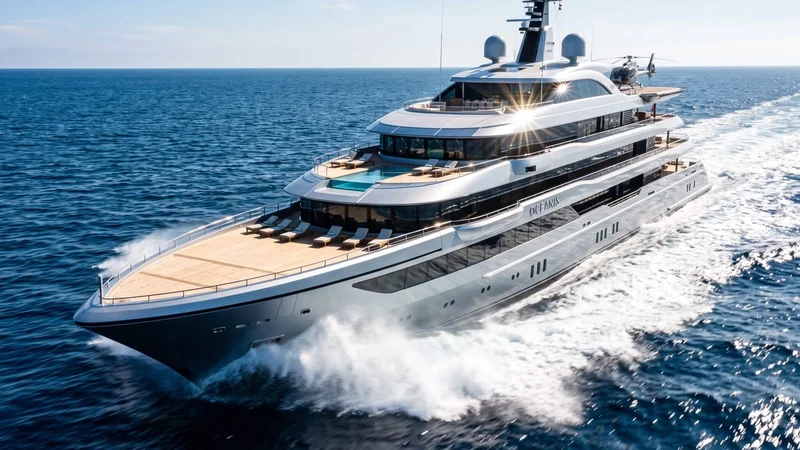
Hiring a crew for a superyacht is the single largest ongoing expense of owning a boat. On average, crew payroll, benefits, and insurance eat up 35% to 45% of your yacht’s total annual running budget.
If you buy a 150-foot yacht, you do not just own a boat; you run a hospitality business. You need a captain to navigate, engineers to keep the generators running, deckhands to polish the chrome, and stewards to serve meals and clean cabins. Even when the yacht sits tied to a dock with zero guests on board, that crew is living on the vessel and collecting a full-time paycheck.
Here is the real breakdown of what superyacht crew positions actually earn, how many workers you need, and why hiring staff drains millions of dollars every single year.
What Does a Superyacht Crew Actually Earn?
Yacht crew salaries depend entirely on the size of the boat and the licenses required to operate it.
The International Maritime Organization (IMO) and maritime flag states set strict rules on "minimum safe manning." That means by law, once a vessel passes certain tonnage thresholds, an owner cannot leave the dock without a legally certified crew on board.
Here is what full-time crew members earn on a typical 160-foot to 200-foot superyacht:
- The Captain (Master Mariner): $180,000 to $300,000 per year. The captain holds ultimate legal responsibility for the vessel, the guest safety, and navigation. On 300-foot megayachts, top captains earn upwards of $350,000 to $450,000 annually.
- Chief Engineer: $130,000 to $220,000 per year. Often the hardest position to fill. They manage high-voltage electrical setups, desalinators, air conditioning, and twin 3,000-horsepower diesel engines.
- First Officer (Chief Mate): $90,000 to $130,000 per year. Second-in-command, handling bridge watches, deck maintenance, and crew drills.
- Executive Private Chef: $80,000 to $140,000 per year. Responsible for high-end cuisine on demand, custom guest diets, and cooking three meals a day for the entire crew.
- Chief Stewardess: $75,000 to $110,000 per year. Manages interior hospitality, cabin service, laundry, wine inventory, and guest concierge tasks.
- Deckhands (3 to 6 positions): $45,000 to $65,000 each per year. Responsible for wash-downs, line handling, tender driving, water sports, and engine room checks.
- Junior Stewards (3 to 5 positions): $40,000 to $60,000 each per year. Responsible for interior cleaning, table service, laundry, and assisting the chief stew.
When you add up base wages on a 200-foot boat carrying 16 crew members, the raw payroll alone sits between $1.8 million and $2.5 million every single year.
How Many Crew Members Do You Actually Need?
A common question among first-time boat buyers is: Why can't I just run the boat with two or three people?
The answer comes down to pure physics and maintenance. Saltwater destroys metal, fiberglass, and teak wood daily. If a crew is not constantly washing down decks and flushing systems with fresh water, the yacht degrades within weeks.
Crew staffing scales directly with the length of the yacht:
- 100 to 120 Feet: Requires 4 to 6 crew members. Annual payroll runs roughly $400,000 to $600,000.
- 130 to 160 Feet: Requires 7 to 10 crew members. Annual payroll runs roughly $750,000 to $1,200,000.
- 180 to 220 Feet: Requires 14 to 20 crew members. Annual payroll runs roughly $1,800,000 to $2,800,000.
- 250 to 330 Feet+: Requires 25 to 50+ crew members. Annual payroll easily clears $4,000,000 to $10,000,000.
This is the primary reason behind the classic maritime benchmark: how much a yacht costs per year to maintain under the 10% annual rule. The bigger the hull, the more full-time staff you have to feed, house, and pay.
The Hidden Costs of Yacht Crew Beyond Base Pay
Base salary is only the starting point. When you hire maritime staff, you take on several additional mandatory expenses:
1. Crew Food and Provisions
Feeding 15 to 20 crew members three meals a day for an entire year adds up quickly. Even with bulk wholesale provisioning, crew food costs run between $80,000 and $180,000 per year.
2. Rotational Flights and Travel
Yacht crews do not work 365 days in a row without breaks. Senior roles, especially captains and engineers, negotiate rotational schedules: 2 months on, 2 months off, or 3 months on, 1 month off. As the yacht moves between the Caribbean, the Bahamas, and the Mediterranean, the owner pays for international round-trip flights to fly relief crew in and out. That travel tab often adds another $40,000 to $100,000 annually.
3. Marine Healthcare and Insurance
Standard health insurance policies do not cover workers on international waters. Owners must purchase specialized Marine Crew Health and Repatriation Insurance, which averages $3,000 to $6,000 per crew member annually.
4. Branded Uniforms and Gear
Crew members wear specific daytime polos, formal evening epaulette shirts, deck shoes, and weatherproof foul-weather gear. Uniform sets easily cost $1,500 to $2,500 per person per season.
Why Good Captains and Engineers Hold All the Leverage
If your captain quits mid-season, your yacht is legally stuck in port.
Because qualified captains with clean safety track records and licensed commercial engineers are in high demand, yacht owners often find themselves in bidding wars. During the peak summer season in places like Monaco, Antibes, or Fort Lauderdale, finding a last-minute replacement captain can cost tens of thousands in recruitment agency commissions.
This steady, mandatory cash outflow explains why ultra-wealthy individuals keep significant liquid cash available. Even if your net worth is tied up in company stock, crew payroll must clear on the first of every month. For a deeper look at how physical assets burn through capital compared to daily income, see our breakdown of how long it would take to spend a billionaire fortune.
What did you think of this article?
Tap a reaction to share your perspective with other readers

Written by
Ramis Ali
Ramis Ali is a CPA finalist, Audit Associate, and finance professional with a background in accounting and financial analysis. His experience includes external auditing, tax compliance, financial modelling, and financial analysis. At RichListing, he writes and reviews content covering net worth, income, assets, business finances, celebrity wealth, and other financial topics. As a finance professional and CPA finalist, his focus is on presenting financial information clearly, accurately, and transparently, using reliable sources and well-supported calculations wherever possible.
View all posts by RamisFrequently Asked Questions
Superyacht crew salaries range from $40,000 to over $350,000 per year depending on rank, vessel size, and maritime certifications. Junior deckhands and stewardesses start between $40,000 and $65,000, while licensed captains and chief engineers earn $130,000 to $350,000+ annually, often with tax-free allowances and full living provisions included.
A superyacht captain earns between $100,000 and $300,000 per year on average. Captains running 100-to-150-foot boats typically earn $120,000 to $180,000, while Master Mariner-certified captains helming 200-foot or larger megayachts command $250,000 to $450,000 annually.
A 150-foot superyacht requires a full-time crew of 8 to 12 members to operate safely and legally. This team includes a licensed captain, first mate, chief engineer, executive chef, chief stewardess, and several deckhands and junior stews to handle 24/7 maintenance, line handling, guest service, and engineering checks.
The yacht owner pays 100% of all crew living and operational expenses. In addition to base salaries, owners cover international marine health insurance ($3,000 to $6,000 per person annually), rotational travel flights, custom uniforms, and three daily meals, which adds $150,000 to $300,000+ in annual overhead.
Yacht crew tax liability depends on nationality and residency status. American citizens must report worldwide income to the IRS regardless of where the vessel operates. However, crew from countries with territorial tax codes or seafarer exemptions (such as the UK Seafarers' Earnings Deduction) can legally reduce their tax burden if they spend more than 183 days at sea.
Comments
Leave a comment
Your email address will not be published. Required fields are marked *